THE DELICIOUS SESAME SEED, NOT ONLY A SEASONING AGENT WHEN TOASTED,
BUT A HIGH PROTEIN ENTREE, as TAHINI, then HUMMOS on pitta and as a very tasty DIP.
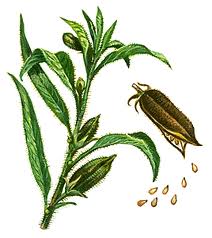
This DYNAMITE tasty seed was favored by the Babylonians and Assyrians many years ago. MIDDLE EASTERN restaurants, to this day, feature it as a toasted topping or as HUMMOS, that bean paste you eat on pieces of PITA BREAD! Imagine the primitive Arabs GRINDING these seeds into TAHINI a kind of peanut butter. They mixed it with cooked garbanzo beans for HUMMOS. (Another food you want to try is the delicious fried GARBANZO bean balls that they call FALAFEL. (served in split pita with pickle, salad, tomato, WOW! DOUBLE WOW is floating in hot broth. In any form, SESAME an GARBANZO are INCREDIBLY good for the body and super high in calcium.)(AN ASIDE: The most delicious food I ever ate was falafel balls dropped into soup. Trader Joes had a bag of falafel balls frozen. Some voice from above made me thaw a few in simmering chicken stock. The flavor exploded in your mouth. Make yourself a bag of balls and freeze them for soup nites. You will find the ultimate comfort food.)
But back to Sesame seeds which started off in history as an ancient oilseed, first recorded as a crop in Babylon and Assyria over 4,000 years ago. Guess they didn't have olives. The sesame crop has since spread from the Fertile Crescent of the Ancient Near East to be grown in many parts of the world on over 5 million acres. They turned 'toasted sesame seeds' into oil for that insanely tasty flavor. I slash a little of that oil into any stewed meat that I make.
The biggest area of production is currently believed to be India, but the crop is also grown in China, Korea, Russia, Turkey, Mexico, South America and several countries in Africa. U.S. commercial production reportedly began in the 1950s. Acreage in the U.S., primarily in Texas and southwestern states, has ranged from 10,000 to 20,000 acres in recent years; however, the U.S. imports more sesame than we grow. It would take at least 100,000 acres of sesame in the U.S. just to meet domestic demand, and production on more acres could be exported.
Thomas Jefferson recognized the potential of sesame when he grew it in test plots (he referred to it as beni or benne), and HIS GROUP PUT OUT THE BEST GROWING INFORMATION. 200 years later we have done little to develop this crop in the U.S. and prices reflect it. An Ounce Bag is a buck! That is a costly spice! So right now it would make a fabulous cash crop for gentlemen farmers. The delicate pods which shatter at the touch prevent MACHINERY from doing harvesting. So you'll rule the marketplace. This seed should be HAND HARVESTED meaning big agri business farms aren't going to get into it. You'll rule the marketplace!
Sesame seeds are unusually high in oil, around 50% of the seed weight, compared to 20% seed oil in soybeans. Sesame is a fairly high value food crop, being harvested both for whole seed used in baking, and for the cooking oil extracted from the seed. This warm season annual crop is primarily adapted to areas with long growing seasons and well drained soils. It is considered drought tolerant, but needs good soil moisture to get established. Sesame has been researched extensively in Missouri and seems to be well adapted to our growing conditions.
RECIPES: The ancients would pound the seed into peanutbutter add lemon, coriander, toasted sesame oil, garlic and twice the amt of garbanzo beans and call it hummus. It is very high in calcium and is a fabulous FAMINE FOOD FOR FARMERS.Sesame craves well-drained and fertile soil, but don't add too much nitrogen.
Sesame grows nicely from direct seedings after the last frost. If you plant your sesame outdoors, space rows 27 to 40 inches apart. Soil must be perfectly friable. Any crusting and the seed won't be able to push through it. Although this herb can tolerate dry conditions, it requires adequate moisture for germination and early growth. It also does not like strong winds. So fence your garden, plot or do a tree-surround.
Days to Harvest: 90-150 -- Days to Germinate: 8-15
FOUND ON THE INTERNET: Sesame [Sesamum indicum (L.)] is a broadleaf plant that grows about 5 to 6 feet tall, with height dependent on the variety and growing conditions. Large, white, bell-shaped flowers, each about an inch long, appear from leaf axils on the lower stem, then gradually appear up the stem over a period of weeks as the stem keeps elongating. Depending on the variety, either one or three seed capsules will develop at each leaf axil. Seed capsules are 1 to 1 1/2 inches long, with 8 rows of seeds in each capsule. Some varieties are branched, while others are unbranched.
The light colored seeds are small and flat, with a point on one end.
Seed size varies, but one report indicates that sesame has roughly
15,000 seeds per pound. Since the flowering occurs in an indeterminate
fashion, seed capsules on the lower stem are ripening while the upper
stem is still flowering. The lowest flowers on a stem may not develop
into pods, but pods will generally begin 12 to 24 inches off the ground
and continue to the top of the stem. Sesame is a long season crop,
taking about 125 to 135 days from planting to maturity in Missouri. If
planted in early June, leaf drop will usually occur in early October,
and the stem will begin drying down. Plants stand upright reasonably
well with sturdy stems, but strong winds can force the plant into a
leaning position late in the season. When Pods look dry, pick and
harvest over newspaper, popping the pods. Watch out they don't run away
and open on you spilling on the ground. super markets have the seed in little,
inexpensive cellophane envelopes for under a dollar and you get enough for
the whole back yard!
Hummus Recipe:
3 medium cloves garlic peeled
2 teaspoons sea salt
2 cups dried organic chickpeas (you can use 2 cans instead but I prefer dried)
1/3 cup of tahini (make sure the tahini is viscous not solid) (you can also use almond or hazelnut butter in lieu of the tahini)
extra virgin olive oil
1 fresh soft lemon
Rinse chickpeas, then soak them in cold salted water overnight, discard skins and water, boil until they become soft. While boiling the chickpeas remove any scum as it floats the the surface and add more water if the water evaporates but they are not yet fully cooked. You can also opt to use the crockpot and cook the chickpeas overnight). Do NOT drain the water into the sink, instead keep it to the side in case you want the consistency of the hummus to be more liquidy.
Pulse the salt and garlic cloves together in a blender and then remove the majority of it from the food processor using a spoon. Set aside
Add the chickpeas to the food processor using a straining spoon (you might have to make two batches depending on the size of your food processor..I always make a lot and save it in the fridge for when friends come over)
Add the juice from one lemon & the tahini
Pulse all in food processor, look at its color it should be more tan than white, for a less thick hummus you can add a little of the liquid from the can.
Making hummus is all about personalizing it to your own tastebuds. I love lemon, garlic and salt so I will douse it in all three. Taste it after the first process and add each ingredient accordingly. Lebanese hummus is all about the lemon.
Once you have it where you like it
Sesame Gardening Tips and Advice
http://www.hort.purdue.edu/newcrop/afcm/sesame.html
^~^~^~^~^~^~^~^~^~^~^~^~^~^~^~^~^~^~
Our POSTER is ANITA SANDS HERNANDEZ, Los Angeles Writer, Futurist and Astrologer. Catch up with her websites TRUTHS GOV WILL HIDE & NEVER TELL YOU, also The FUTURE, WHAT'S COMIN' AT YA! & HOW TO SURVIVE the COMING GREAT DEPRESSION, and Secrets of Nature, HOLISTIC, AFFORDABLE HEALING. Also HOW TO LIVE on A NICKLE, The FRUGAL PAGE.* Anita is at astrology@earthlink.net ). Get a 35$ natal horoscope "my money/future life" reading now + copy horoscope as a Gif file graphic!
<=== BACK TO TRACKING THE ECONOMY, an INDEX PAGE
<===BACK TO MONEY SECRETS ONLY THE EXPERTS KNOW
<=== BACK TO SECRETS THE GOV DOES NOT WANT YOU TO KNOW
<=== SHOW ME THE FIX INDEX PAGE.
<== SHOW ME THE HAPPY R)EVOLUTION PAGE
<=== BACK TO "GUERILLA CAPITALISM" -- THE SOLUTION!
<=== BACK TO REAL CAUSES OF THE MELTDOWN -- a WEBPAGE
<------BACK TO THE VULTURE SANDWICH, WORLD STARVATION INDEX PAGE
<------ BACK TO CROOKED CONNECTED CEOS STEAL A CORPORATION FROM THE STOCKHOLDERS, THEN OVERCHARGE THE PUBLIC
<=== GUERILLA CAPITALISM FOR YOU AND ME!
<----- BACK TO THE IMPORT EXPORT TRAINING SEMINAR
<----- BACK TO THE LEGACY TRADE SEMINAR
<===BACK TO THE ACTIVIST'S EASY BREEZY METHOD FOR EVOLUTION
<=== BACK TO THE EASY, BREEZY, NO WORK AT ALL GARDEN ARCHIVE for Suburban farmers
<== THE PORTAL TO 7,000 FREE CLASSROOMS, REPUBLISH ANY OR ALL, ATTRACT AD REVENUE TO YOUR BLOG